LP: £25.99
Label: Muzikawi
Release date: 13.02.2026
Dispatched on Release Date
Label: Muzikawi
Release date: 13.02.2026
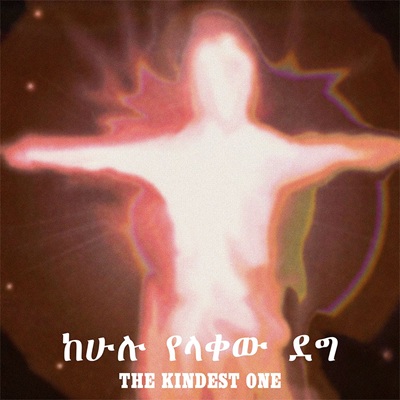
At first listening, Jorga Mesfin’s The Kindest One leaves the audience uncertain of time. “Once upon a time there was…” but when is this? There are two answers to that; the first plain answer is that it is an overlooked recording from 2008. The longer answer is that it is a long foray into Ethio-jazz that draws bits of inspiration from all kinds of situations in Ethiopian music, jazz music, and specifically Ethiopian jazz music that precedes it. Jazz is at once avant-garde and rooted in tradition. Of this the very concept of “jazz standard” bears witness – “Autumn Leaves”, “Body & Soul”, “Summertime”, “Caravan”, “A Night in Tunisia” etcetera are all part of the tradition of evergreens that a jazz musician is indelibly measured by. But invariably, change occurs. In two ways, the most obvious is that new, radical, or almost iconoclastic renditions of traditional songs add to the treasure of jazz. Or new songs are added to the canon. Mulatu Astatke wedded Ethiopia to jazz as far back as the 1960s, a synthesis that provoked attention, awe, and admiration in its time, but also a fair share of skepticism because of how the ingenious mixture of traditional Ethiopian scales, songs, and melodies were so modernized in the idiom of Latin jazz. Unsurprisingly, Ethio-jazz ushered in a new canon of standards. If Astatke’s Ethio Jazz fused vibes, piano, and percussion heard in the Afro-Cuban vein Charlie Parker and Dizzie Gillespie had fleshed out with millennia-old Ethiopian themes and pentatonic scale, Jorga Mesfin’s 2008 album The Kind Ones: Degagochu and now The Kindest One takes this courageous syncretism further. An unnoticed album when it was released, it revels in the sort of modality brought to the fore by John Coltrane, Wayne Shorter, and Bill Evans. Just as Astatke, the acknowledged godfather of Ethio Jazz ushered in a new idiom of music through mastery of a wide range of instruments, Mesfin mildly attacks the listener with a minimal array of sounds used to the most dramatic effect imaginable, simply by masterfully building tension and releasing it sparingly. In his rendition of Tizita – arguably one of the most recurringly played themes in Ethiopian music, and by now inscribed in the canon of standards – it is as if he reaches the mythological world painted by Miles Davis on Concierto de Aranguez from a secret East African path previously unknown. The Kindest One is so captivating that its tones, fluidly moving from tranquility to held-back frenzy with increasing intensity, will give you inner visions. Somewhat fitting that Mesfin has combined his musicianship with teaching music, as you are likely to be taught to listen in new ways, hearing nuances in the timbre of his saxophone that you might not stumble upon were you to listen solely to traditional Ethiopian music or only to traditional jazz.

Jumbo Records
1-3 Merrion Centre
Leeds
LS2 8NG
Google map: Cick here
Tel: 0113 245 5570
Email: info@jumborecords.co.uk
Opening Hours
Mon9:30am -5:30pm
Tues9:30am -5:30pm
Wed9:30am -5:30pm
Thurs9:30am -5:30pm
Fri9:00am -5:30pm
Sat9:00am -5:30pm
Sun11am - 5pm